St. Augustine Lawn Weed Calendar: When Dollar Weed, Crabgrass, and Nutsedge Actually Show Up
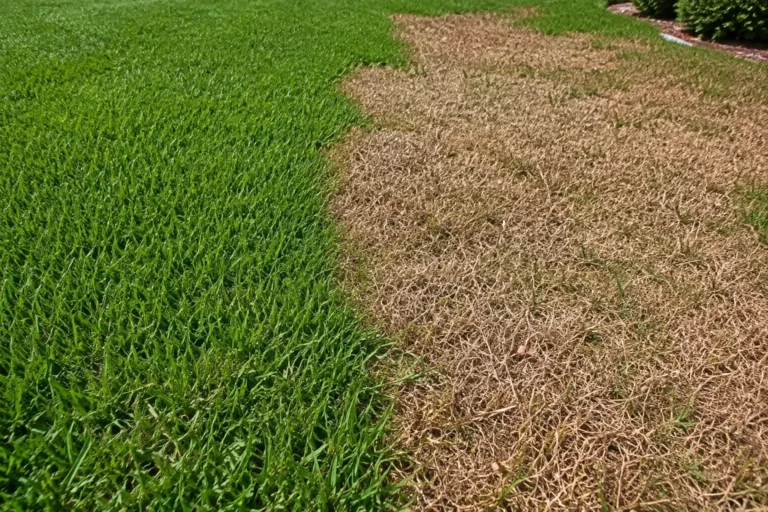
Walk any yard in World Golf Village in late October and you’ll see it. A lawn that looked clean all summer suddenly has pale green patches creeping in low spots and along the edges of flower beds. The homeowner didn’t do anything different. The weeds just showed up on schedule, because that’s exactly what they do.
Most weed-control advice online is written for the whole country at once. It tells you to treat “in early spring” or “before the first frost,” which means nothing in a place that barely gets a frost. St. Johns County runs on its own calendar, tied to soil temperature and grass type, not a national average.
This guide breaks down when dollar weed, crabgrass, and nutsedge actually arrive in St. Augustine, Florida, and why guessing the timing costs you a full season of control. By the end, you’ll know the two real pre-emergent windows, why post-emergent products work differently, and what to check on your lawn before each window opens.
Why Weed Timing in St. Johns County Doesn’t Follow the National Calendar
Weeds don’t germinate on a date. They germinate when soil and air temperature cross a threshold, and that threshold arrives at a different time depending on where you live. A national gardening calendar built around a Midwest or Northeast growing season simply doesn’t apply here.
St. Johns County sits in USDA Zone 9a, with mild winters and a long growing season for St. Augustine grass. Grass that would go fully dormant in a colder state stays semi-active here through most of the year, and so do the weeds competing with it.
That matters because pre-emergent herbicide has to go down before weed seeds germinate, not after. If you apply on a date copied from a national guide written for a much colder climate, you’re often weeks too late for the actual soil temperature in St. Augustine, Florida. Building a weed-control schedule around local temperature triggers, not a generic calendar date, is the difference between staying ahead of weeds and constantly reacting to them.
Floratam is the most common St. Augustine grass variety on lawns across St. Johns County, though Palmetto and Zoysia show up in some communities and shaded properties too. All three deal with the same seasonal weed pressure on the same general timeline, even though their day-to-day mowing and watering needs differ. The pre-emergent and post-emergent timing in this guide applies regardless of which of the three you have.
Dollar Weed vs. Crabgrass vs. Nutsedge at a Glance
Before the calendar makes sense, it helps to know which weed you’re actually looking at. These three cause most of the complaints on St. Augustine grass lawns, and they don’t respond to the same treatment, product, or timing.
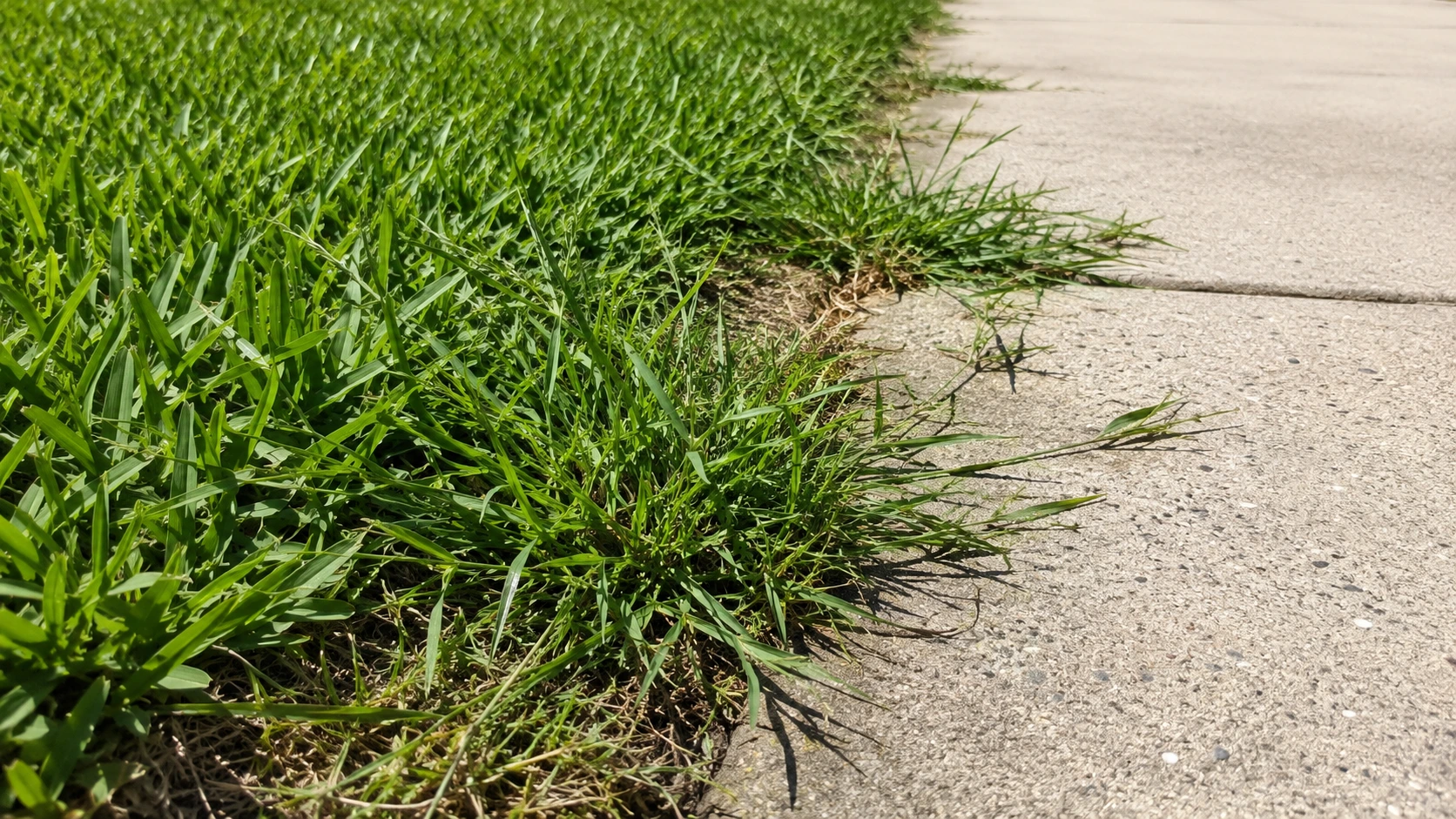
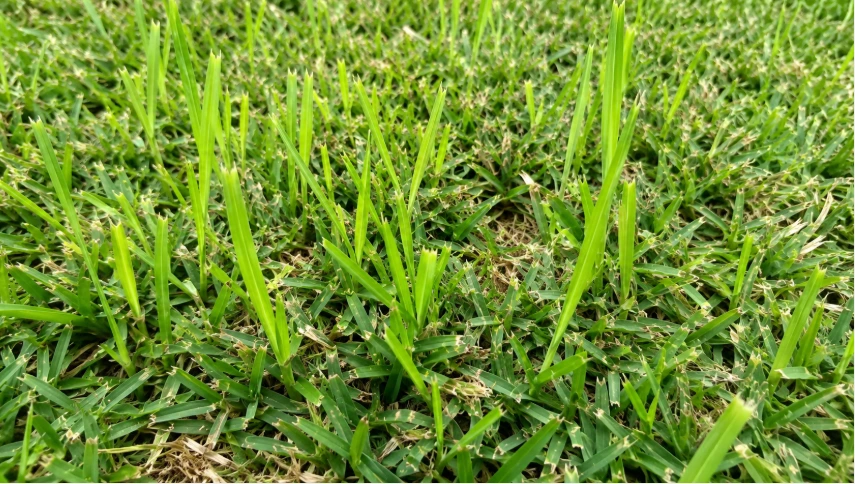
Dollar weed (Hydrocotyle species) has round, coin-shaped leaves on a single stalk and spreads low across wet soil. Crabgrass (Digitaria species) is a coarse, spreading grassy weed that shows up in thin or bare turf during warm weather. Nutsedge (Cyperus species) looks grass-like but grows faster than your lawn and has a triangular stem you can feel by rolling it between your fingers.
Getting the identification right matters because a product built for broadleaf weeds will not touch nutsedge, and a pre-emergent timed for crabgrass won’t stop dollar weed, which is already established rather than newly germinating each season. For a full breakdown of treatment options for each of these, the Weed Control page covers product selection and application in more detail.
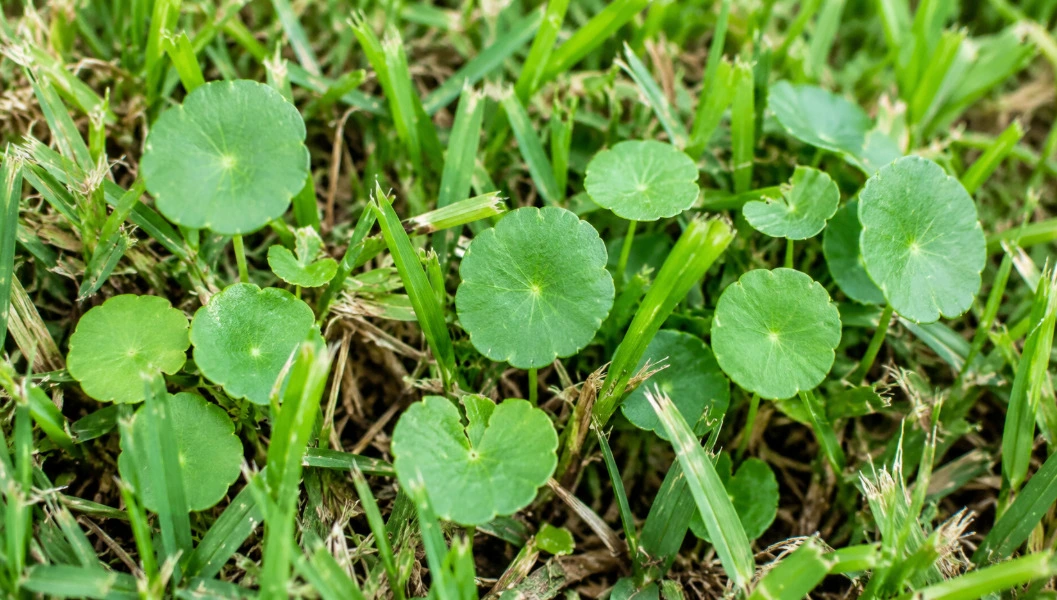
What’s the difference between dollar weed, crabgrass, and nutsedge?
Dollar weed has round, coin-shaped leaves and grows in wet soil. Crabgrass is a coarse grassy weed that spreads in thin turf during warm months. Nutsedge has a triangular stem and outgrows the surrounding lawn within days of mowing.
The Two Pre-Emergent Windows Most Homeowners Miss
There isn’t one pre-emergent window in St. Augustine, Florida. There are two, and they target completely different weeds.
The spring window targets summer annual weeds like crabgrass. According to the University of Florida IFAS Extension publication Weed Management Guide for Florida Lawns (ENH884/EP141), the general rule of thumb for North Florida is a preemergence herbicide application around March 1, or before day temperatures reach 65 to 70 degrees Fahrenheit for four to five consecutive days.
The fall window targets winter annual weeds like annual bluegrass. The same UF/IFAS guide places this window in early October for North Florida, applied when nighttime temperatures drop to 55 to 60 degrees Fahrenheit for several consecutive days. That’s the opposite trigger from spring: a nighttime temperature drop instead of a daytime temperature rise.
Miss either window and the herbicide becomes far less useful, because pre-emergent products work by blocking germination. Once the seed has already sprouted, you’re now looking at a post-emergent problem instead. That’s the core idea behind fall weed control for St. Augustine grass: get the barrier down before the cooler nights trigger germination, not after the weeds are already visible.
When should I apply pre-emergent in St. Augustine, Florida?
Two separate windows apply. Target early October for winter weeds, when nights hold at 55 to 60 degrees for several consecutive days. Target around March 1 for summer weeds like crabgrass, per UF/IFAS guidance for North Florida.
Why Pre-Emergent Doesn’t Work Once Weeds Are Already Up
Pre-emergent herbicide forms a barrier in the top layer of soil that stops seeds from sprouting. UF/IFAS describes it simply: preemergence herbicides are applied prior to weed seed germination, and postemergence herbicides are active on emerged weeds. A pre-emergent product has nothing to act on once a weed already has leaves above the surface.
That mix-up, applying a pre-emergent to weeds that are already growing, is one of the most common reasons a homeowner’s own weed control program fails. The application isn’t wrong, the timing is.
Post-emergent herbicide works the opposite way. It’s applied directly to weeds that are already growing, targeting the plant itself rather than the soil. Using a post-emergent product early, before weeds appear, does nothing, because there’s no plant tissue for it to act on yet.
The two aren’t interchangeable, and pre-emergent weed control in St. Augustine only works on the front end of the germination window. Post-emergent weed control in St. Augustine picks up everything pre-emergent missed.
Will pre-emergent kill weeds that are already growing?
No. Pre-emergent only stops seeds from germinating. Weeds already visible in your lawn need a post-emergent product matched to that specific weed type instead.
Can I use the same product for pre-emergent and post-emergent control?
Generally no. They’re formulated for different jobs, blocking germination versus killing existing growth, and most products are labeled for one purpose. Check the label before applying either type to St. Augustine grass.
The Fall Window: What Shows Up in October and Why Waiting Matters
October in St. Johns County still feels like summer during the day, which is exactly why homeowners miss this window. The trigger isn’t the daytime heat. It’s the string of cooler nights that starts arriving as fall settles in.
Winter annual weeds germinate through the cooler months and become visible by late winter if nothing was applied in the fall. By the time you see them in February, the pre-emergent window for that generation has already closed, and you’re left treating an established weed instead of preventing one.
Applying in early October, once nighttime temperatures hold in that 55 to 60 degree range for several consecutive days, gets ahead of that germination instead of reacting to it after the fact. This is where winter weed control in St. Augustine actually starts, weeks before winter itself arrives.
The Spring and Summer Window: Crabgrass, Dollar Weed, and Watering
Spring in St. Augustine brings warmer soil, more rain, and the start of crabgrass season. The March 1 target from UF/IFAS gives you a head start before daytime temperatures consistently hit that 65 to 70 degree range that triggers germination.
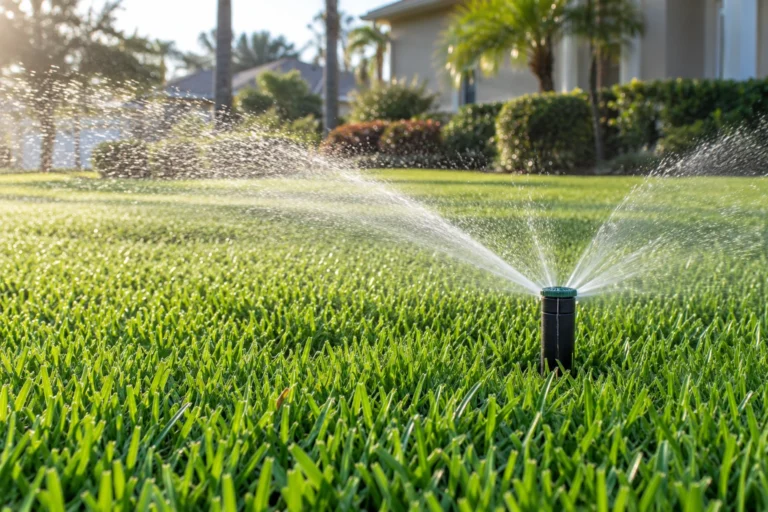
Dollar weed follows a different pattern entirely, and it isn’t about timing a pre-emergent application. According to the UF/IFAS publication Weeds as Indicators of Soil Conditions in Lawns (EP634), dollar weed is a reliable indicator of wet environments, and lawns that are overwatered or stay wet for extended periods can become overtaken with weeds including dollar weed and sedges. Because the problem is a wet-soil environment rather than a seasonal germination event, a pre-emergent timing window isn’t the fix for it. Correcting watering habits and improving drainage does more for dollar weed control in St. Augustine than any herbicide timing schedule.
Mowing at the correct height for your grass type also matters here. UF/IFAS extension guidance notes that consistently mowing at the correct height, along with proper watering and fertilizing, is part of keeping a lawn healthy enough to resist weed problems generally. If mowing height or frequency has slipped, that’s worth checking alongside your weed-control schedule. Weekly lawn maintenance that keeps mowing height and timing consistent plays a direct role in how much weed pressure builds up between treatments.
Why does my lawn have weeds even though I mow and water it?
Overwatering favors dollar weed and sedges, and inconsistent mowing height weakens the turf’s ability to compete with weeds generally. Deep, infrequent watering and mowing at the correct height for your grass type reduce the conditions weeds need to establish.
Do I need fall weed control if my lawn looks weed-free?
Yes, if you’re in the window. Winter weed seeds germinate below the surface before you see anything above it. Waiting until weeds are visible means the pre-emergent window has already closed for that generation.
Nutsedge Doesn’t Follow the Same Calendar
Nutsedge deserves its own section because it breaks the rules that apply to the other two. It isn’t a broadleaf weed and it isn’t a grass, even though it looks like one. Standard broadleaf weed control on St. Augustine grass, the kind that handles dollar weed or clover, will not control nutsedge.
Nutsedge also spreads through underground growth, not just seed, which is part of why it keeps coming back even after the visible plant is gone. UF/IFAS lists specific herbicide options built for sedge control, including products based on imazaquin, penoxsulam, or sulfentrazone, such as formulations labeled specifically for use on St. Augustinegrass lawns. A standard crabgrass or broadleaf product will not be on that list, and timing matters less here than correctly identifying that you’re dealing with nutsedge in the first place rather than a fast-growing grassy weed.
Will regular weed killer kill nutsedge?
No. Nutsedge needs a herbicide labeled specifically for sedge control. Standard broadleaf or crabgrass products will not affect it, since nutsedge isn’t a true broadleaf weed or a grass.
Matching Weed Control With HOA Timing
Homeowners in managed communities often ask how weed control timing lines up with HOA expectations. The general answer is straightforward. A lawn treated on the fall and spring pre-emergent windows described above, combined with consistent mowing, stays ahead of the kind of visible weed growth that typically draws attention during a community review.
Specific inspection schedules and violation policies vary by community and change over time, so this article won’t guess at dates or thresholds for any particular HOA. If you’re in a managed community, your HOA’s own documentation is the accurate source for that timing, and building your weed treatment around the temperature windows above puts you ahead of most review cycles regardless of the exact date.
How far ahead should I deal with visible weeds before an HOA or property inspection?
As soon as you notice them. Weeds spread quickly in St. Augustine’s growing season, and treating early gives products time to work before any scheduled review of your property.
DIY Weed Calendar vs. Professional Weed Control
A homeowner who tracks the two pre-emergent windows, applies the correct product for each weed type, and stays consistent with mowing and watering can manage a lot of this without professional help. The information in this guide is enough to build that schedule.
Where DIY gets harder is identification and product matching. Mistaking nutsedge for crabgrass, or applying pre-emergent after weeds have already germinated, wastes both money and the window itself. Buying a broadleaf product for a nutsedge problem is one of the most common versions of this mistake. It’s also easy to lose track of the calendar during a busy season and miss the narrow window entirely, especially the fall one, since October doesn’t feel like a lawn-care month to most homeowners.
The cost of getting it wrong isn’t just the price of one bottle of herbicide. A missed window means waiting for the next one, months away, while the weed problem spreads in the meantime. Two rounds of the wrong product cost more than one round of the right one applied on time, and by the time a homeowner realizes the product didn’t work, the germination window that would have prevented the problem is usually already closed.
Can homeowners handle weed control themselves?
Yes, for homeowners willing to track both windows and correctly identify what they’re treating. Where it gets difficult is product matching and timing consistency across a full year, which is where professional scheduling helps.
If you’d rather not track two separate temperature-based windows every year and match products to three different weed types, a professional weed control program handles the timing and product selection for you.
What Professional Timing Looks Like
A professional program built around these two windows applies the right product before each germination period rather than reacting to weeds that are already visible. That timing discipline is the main difference between a lawn that stays ahead of weed pressure and one that’s constantly playing catch-up.
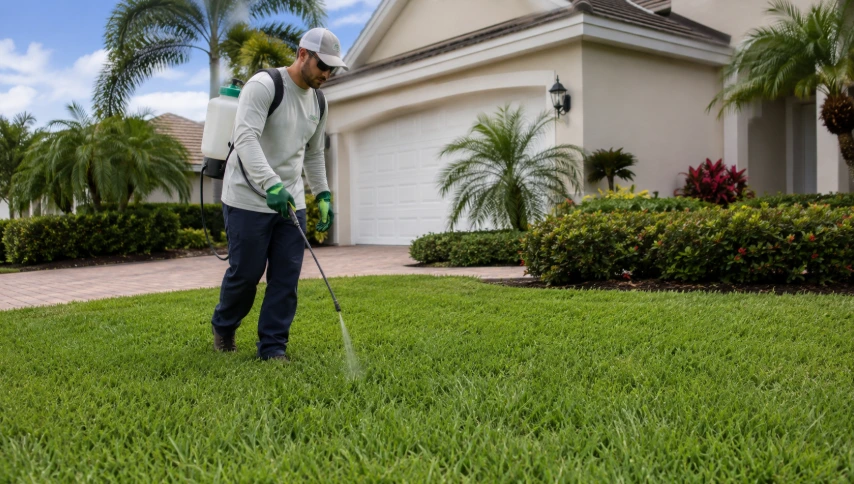
One example already on our Weed Control page: a Palencia homeowner, Sandra T., described her results after treatment this way: “Two applications and the dollar weed in our front beds is gone. They caught nutsedge before it crossed into our Floratam. No HOA flag since we started.” That’s her own account, published on the site, not something added here for this article.
If a scheduled treatment doesn’t hold, the standing policy is straightforward: call within 48 hours and the treatment is redone at no charge, or that visit is refunded if you’re still not satisfied.
Will pre-emergent hurt my Floratam or Palmetto grass?
Products labeled for use on St. Augustine grass are formulated for that turf type at the correct application rate. Always confirm the label specifically lists Floratam, Palmetto, or St. Augustinegrass before applying anything, since not every lawn herbicide is safe across every turf type.
Early Warning Signs Before Each Weed Window Opens
A short watchlist covers most of what matters heading into either window.
Before the fall window in October, watch for nighttime temperatures settling into the 55 to 60 degree range for several nights in a row. That’s your signal, not the calendar date alone.
Before the spring window around March 1, watch for a run of warmer days reaching 65 to 70 degrees. Also check low spots and shaded beds for dollar weed, since its presence points to a watering or drainage issue worth fixing regardless of season.
Year-round, keep an eye on mowing height and any thin or bare patches in the lawn. A stressed or thin lawn competes poorly against weeds compared to a consistently maintained one, which is part of why mowing and watering habits show up throughout this guide alongside the herbicide timing itself.
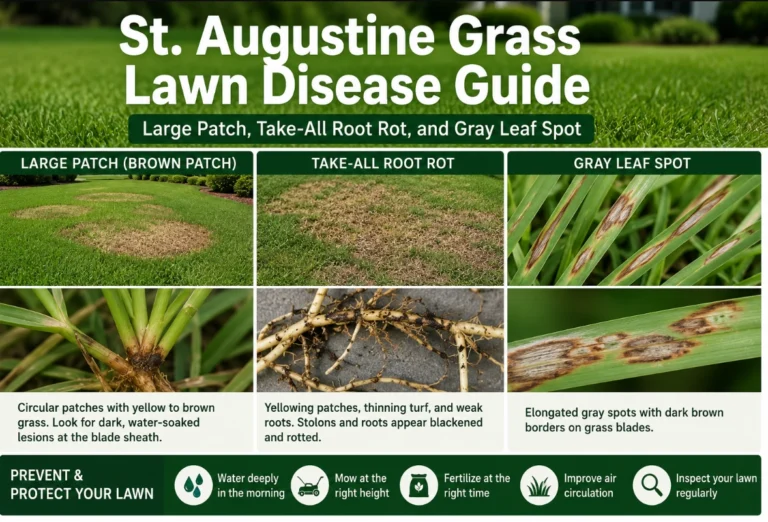
If dead or thinning turf shows up alongside weed pressure, that’s sometimes a sign the lawn needs more than a treatment schedule. In cases where bare ground has taken over, sod installation is sometimes the more practical fix than trying to restore coverage through weed control alone.
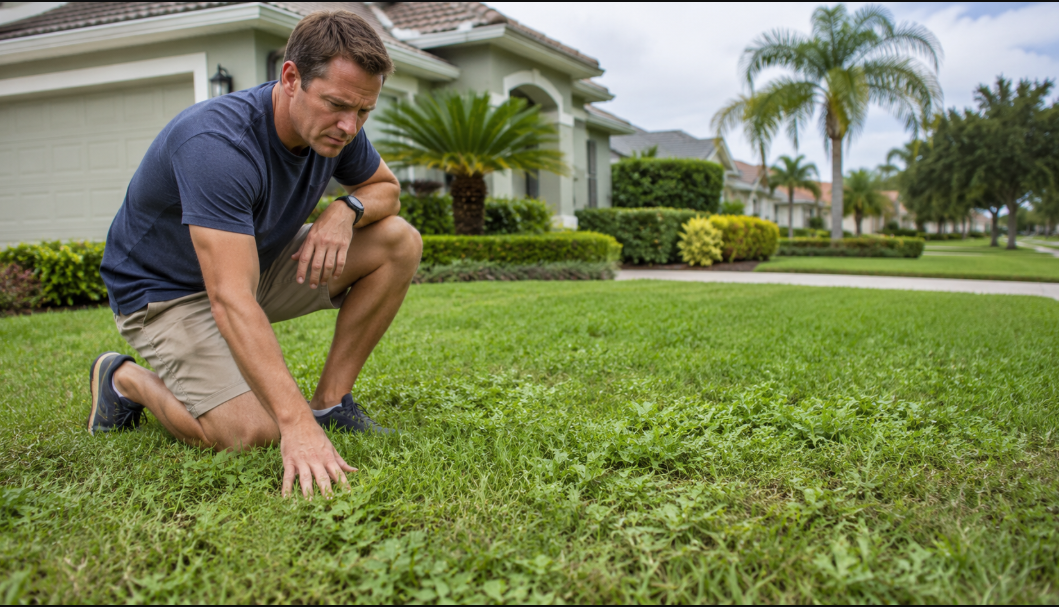
Keep a simple running note of what you see each month rather than trying to remember it later. A phone photo of the same corner of the yard every few weeks makes it easy to spot a new patch of dollar weed near a downspout or a thin strip of turf along a sidewalk before it spreads across the whole bed. That habit alone catches most problems earlier than waiting for a treatment window to roll around.
Put the Calendar to Work
The lawn in World Golf Village that looked fine all summer and then filled with pale patches in October wasn’t unlucky. It just crossed the fall germination window without a pre-emergent application in place. The same pattern plays out in reverse every spring around St. Johns County.
Two windows, tracked by temperature rather than a generic date, cover most of what determines whether a St. Augustine, Florida lawn stays ahead of weeds or spends the year reacting to them. Start by checking your lawn this week for dollar weed in low or shaded spots, and mark your calendar for the next window based on the temperature triggers above.
If you’d rather hand off the tracking and product selection, contact us or call (904) 331-8008.